In-Depth Review: vBrief
VerifiedWhat It Is
Emails, documents, notes and chats become a verified project record. Every item is attributed, sits one click from its original source, and stays current as the project evolves. The AI reads incoming material and flags potential clashes and duplicates against what you already hold. You confirm each item against its original source, and nothing enters your trusted record until you do. A live brief, a risk register, a change log and a task list then read from that one verified, attributed record.
Who It's For
Best for architects and AEC project teams who need a defensible record of what was decided, when, and by whom.
Why It Matters
Project requirements arrive by email, in meetings, and in marked-up documents, and they are rarely written down in one place. vBrief reads that incoming material, proposes the requirements and risks it finds, and keeps a traceable record once a person confirms them. The record is what a team falls back on when a dispute or a design change raises the question of what was agreed.
Problem Solved
Project decisions live scattered across emails, meeting notes, chats, and documents, and by the time a dispute or a design change happens, no one can say with confidence what was actually agreed and where. vBrief addresses this by having AI surface candidate requirements, risks, and asks from incoming material, flagging potential clashes or duplicates against what the project already holds. Nothing is added to the trusted record until a person confirms it against its original source, so the record stays human-verified rather than AI-asserted.
Audience Fit
Primary Users:
- Architect
- Project Manager
Ideal Fit:
- Teams that need to prove what was decided and when
- Projects with a high volume of email and meeting-note traffic
- Firms wanting a single append-only log instead of scattered inboxes
- Teams that want human sign-off before anything becomes official
Key Differentiator
Human confirmation before anything enters the record
Workflow Fit
Project Phases Covered:
- All phases
Where It Plugs In:
Sits alongside a project's existing email and document flow, continuously extracting candidate requirements, risks, and asks as new material arrives, so the verified record stays current without a separate manual logging step.
User Experience
Speed: Web-based for instant access
Interface: Review queue for confirming AI-surfaced items, plus a project view of active and pending requirements, risks, and asks
Learning Curve: Gentle, reviewing and confirming flagged items is the core loop
Collaboration: Shared project record with source attribution, so any team member can trace an item back to its origin
Integrations: See website for current integration details
Screenshots
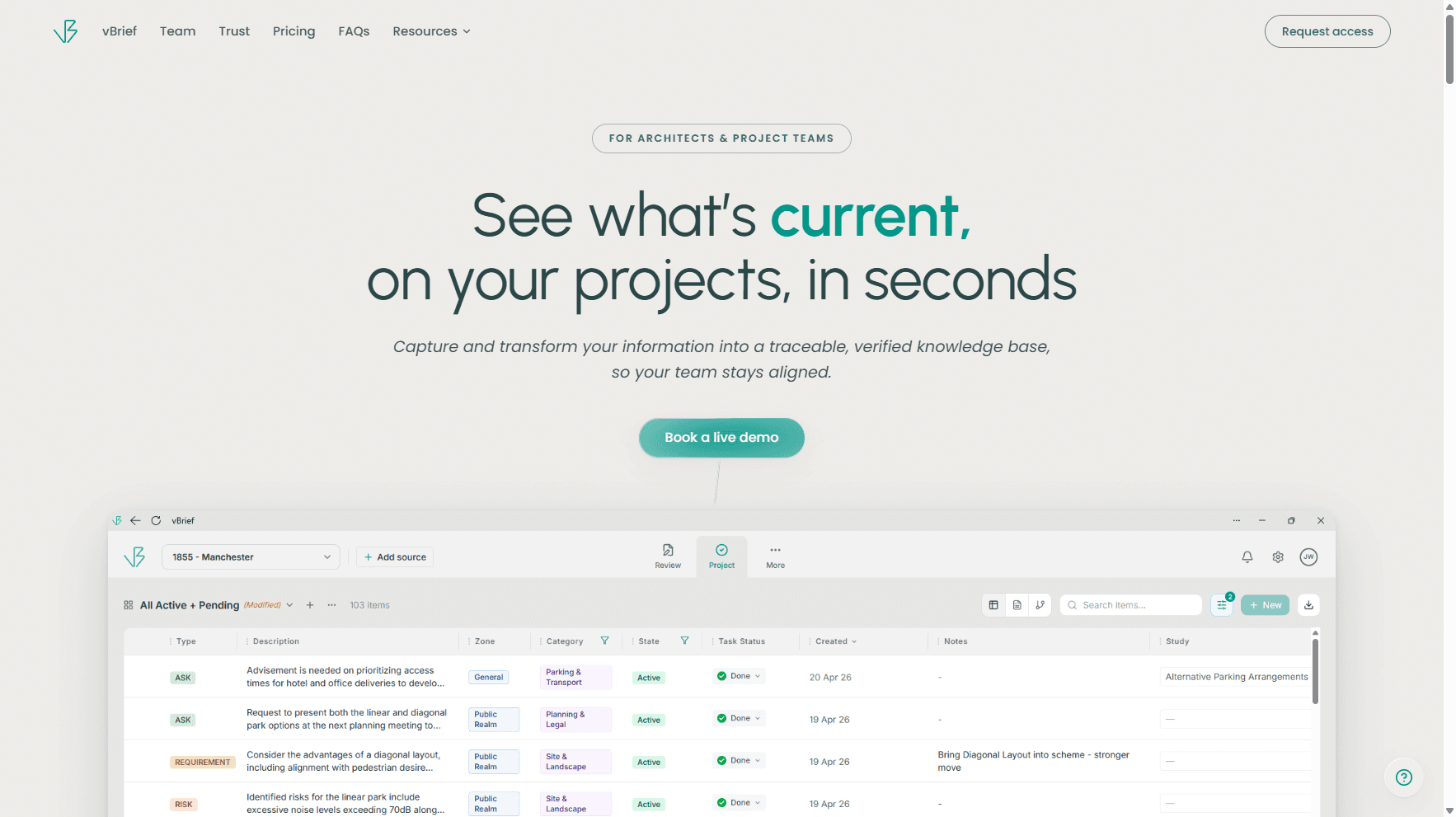
vBrief landing page, capture and transform project information into a traceable, verified knowledge base
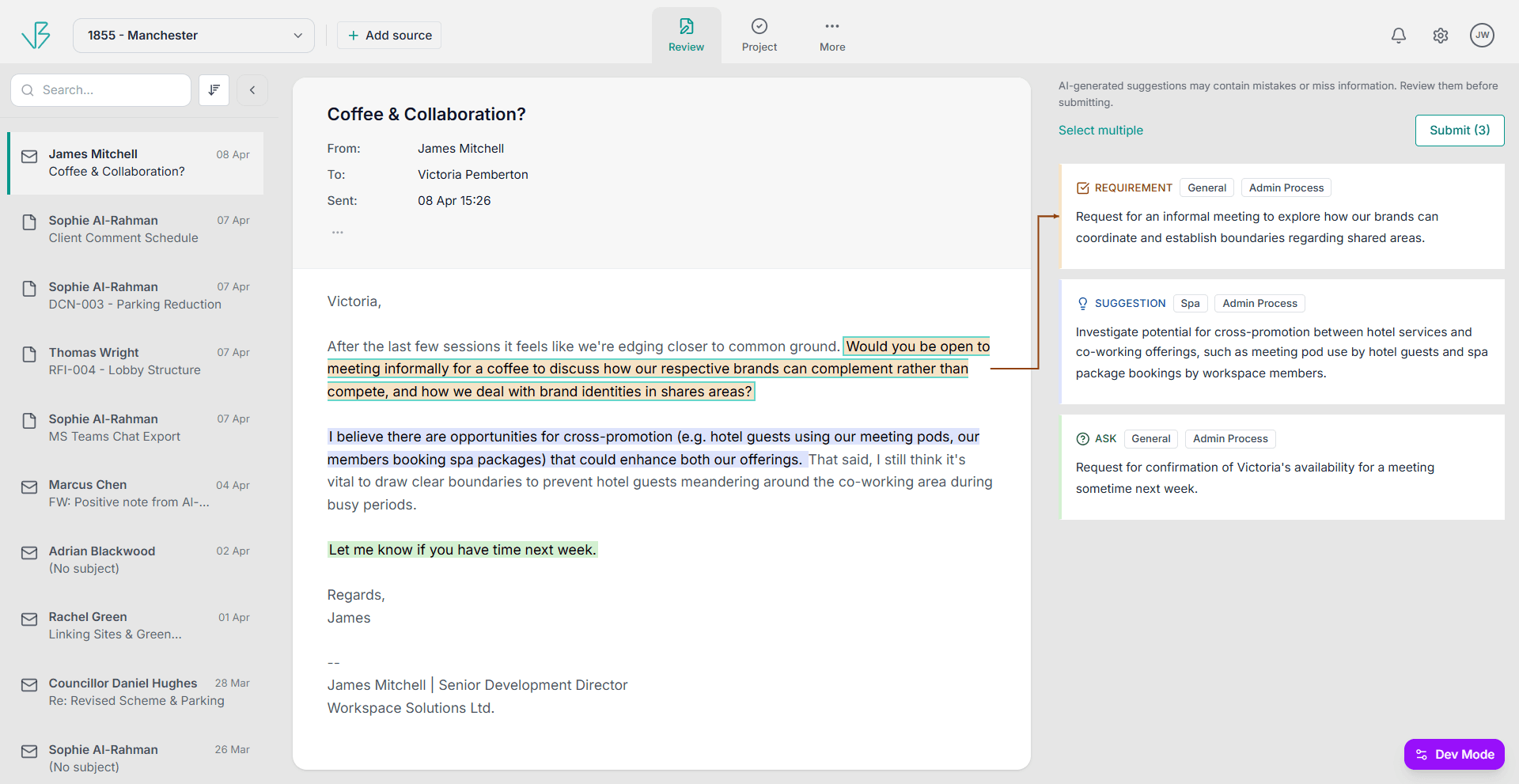
Review queue, AI-suggested requirements and asks awaiting human confirmation before entering the record
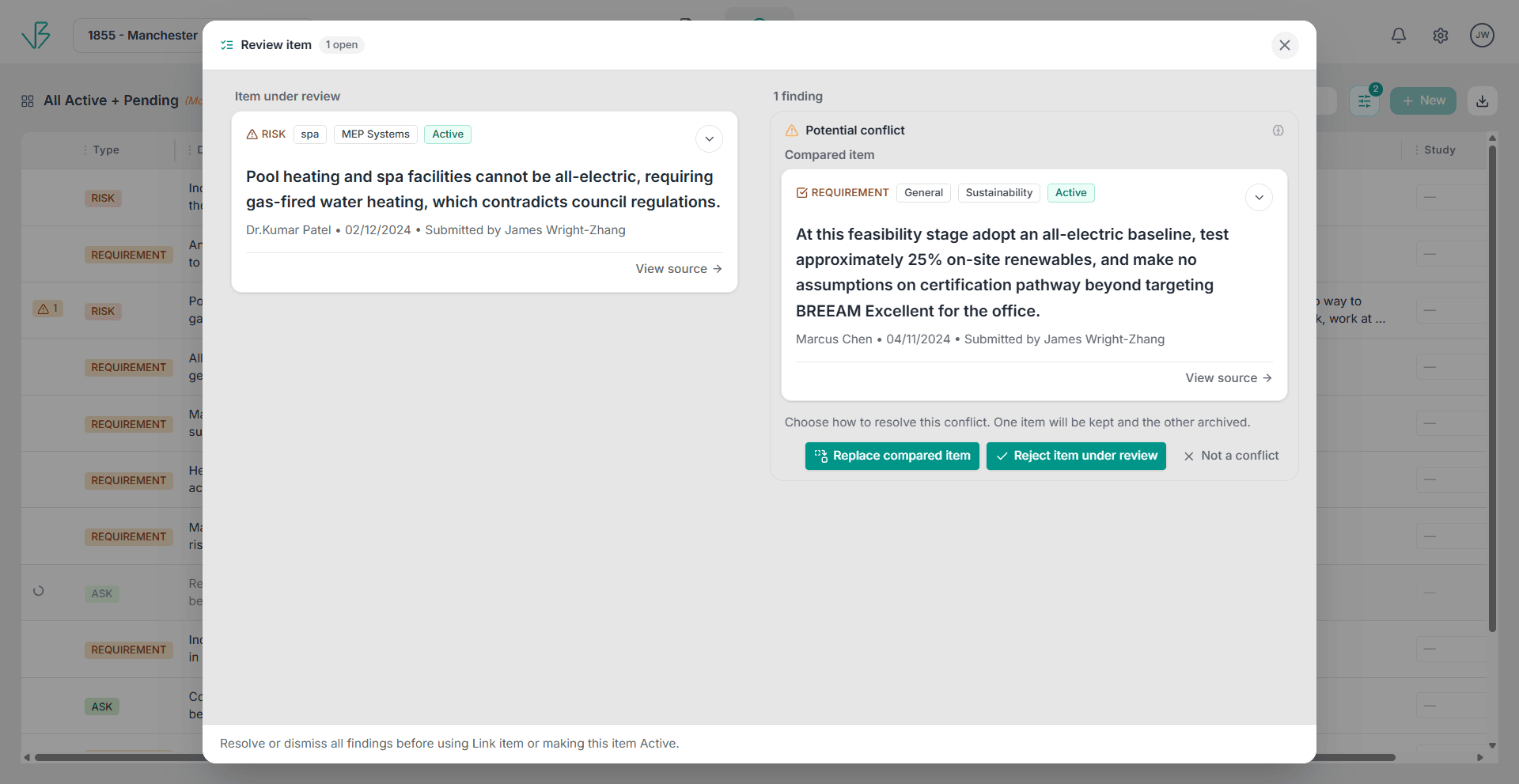
Conflict detection, a potential conflict between two submitted items, with source attribution for each
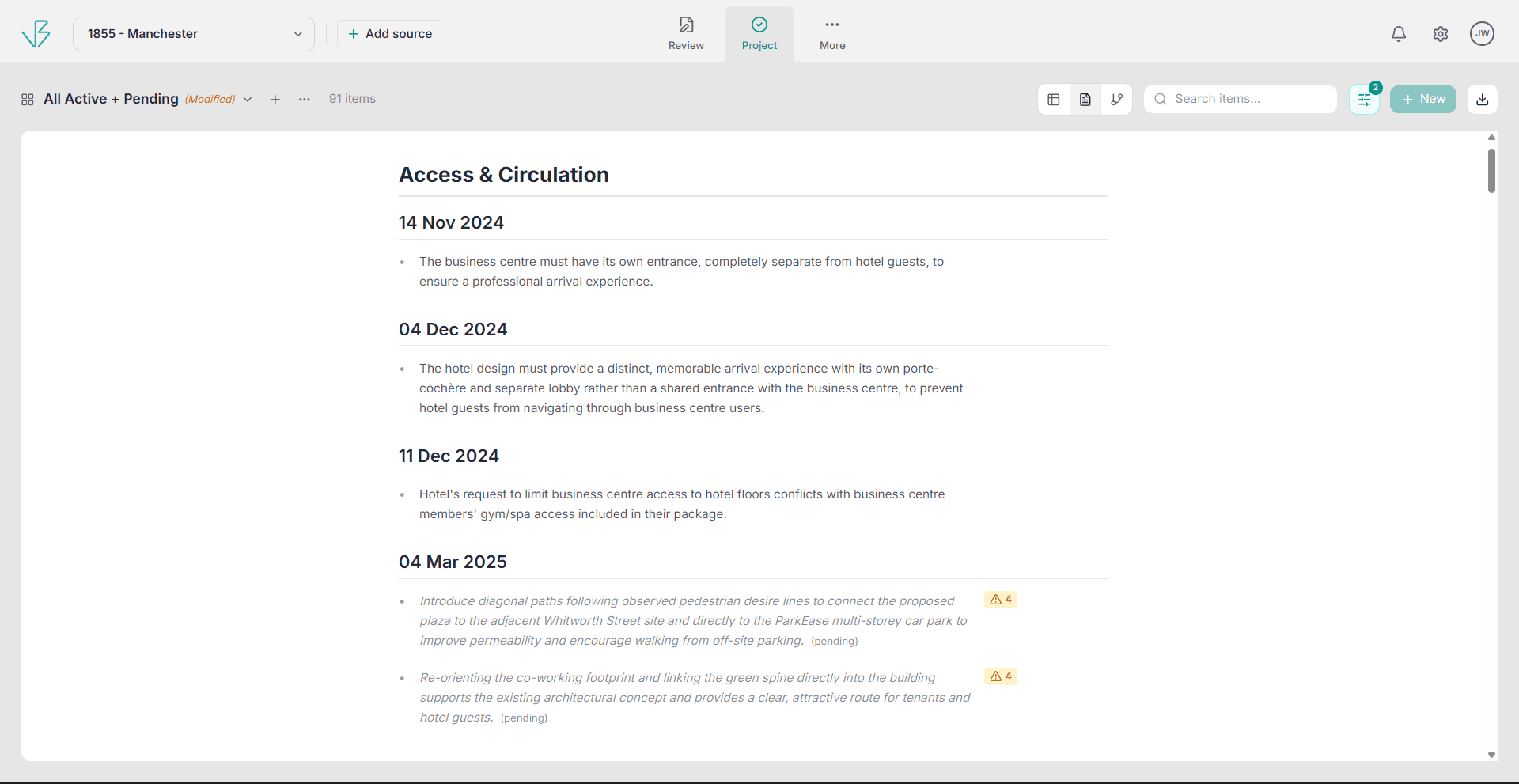
Project document view, dated log entries grouped by category, each traceable to its source
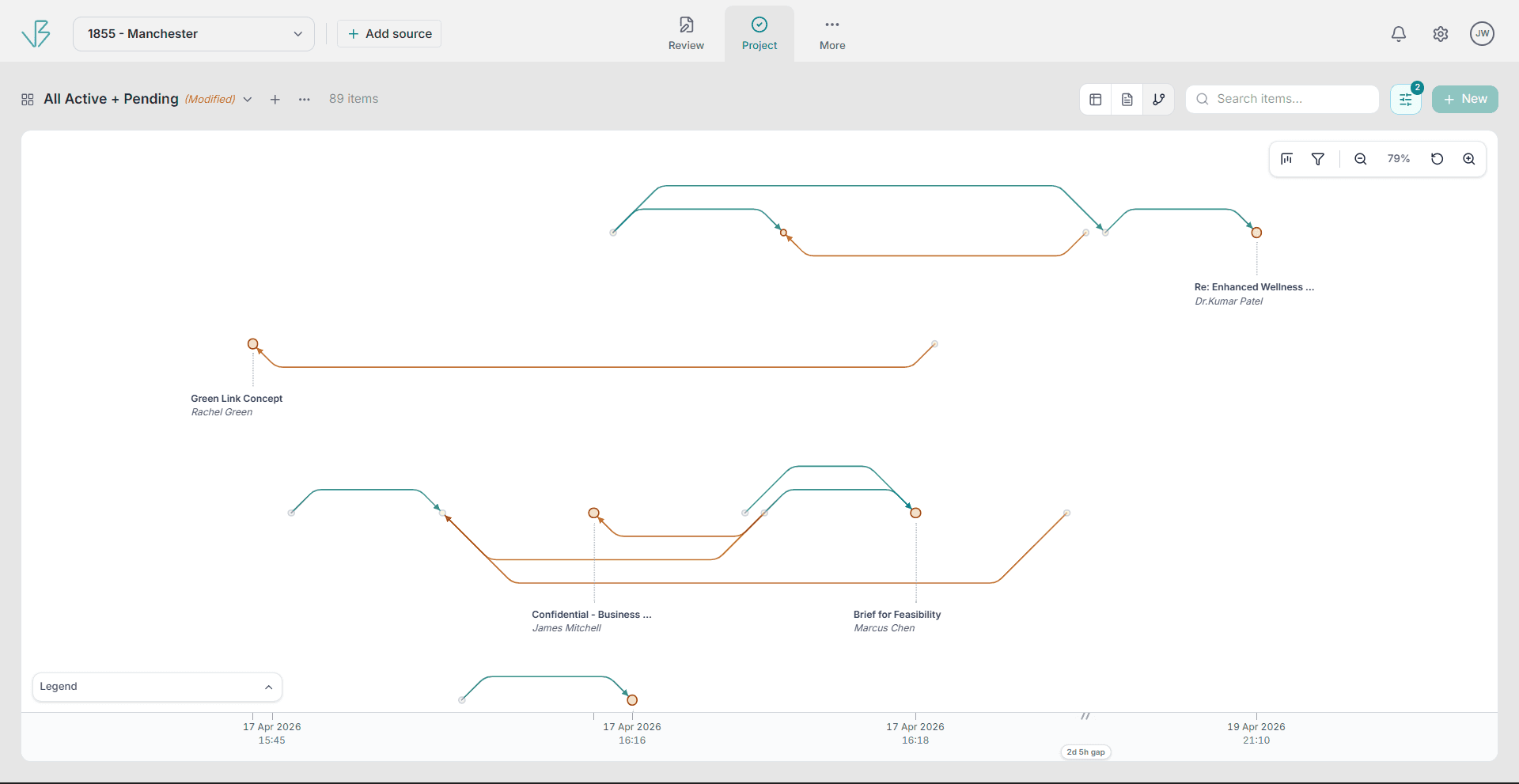
Project timeline, visual trace of how items and decisions connect across source documents over time
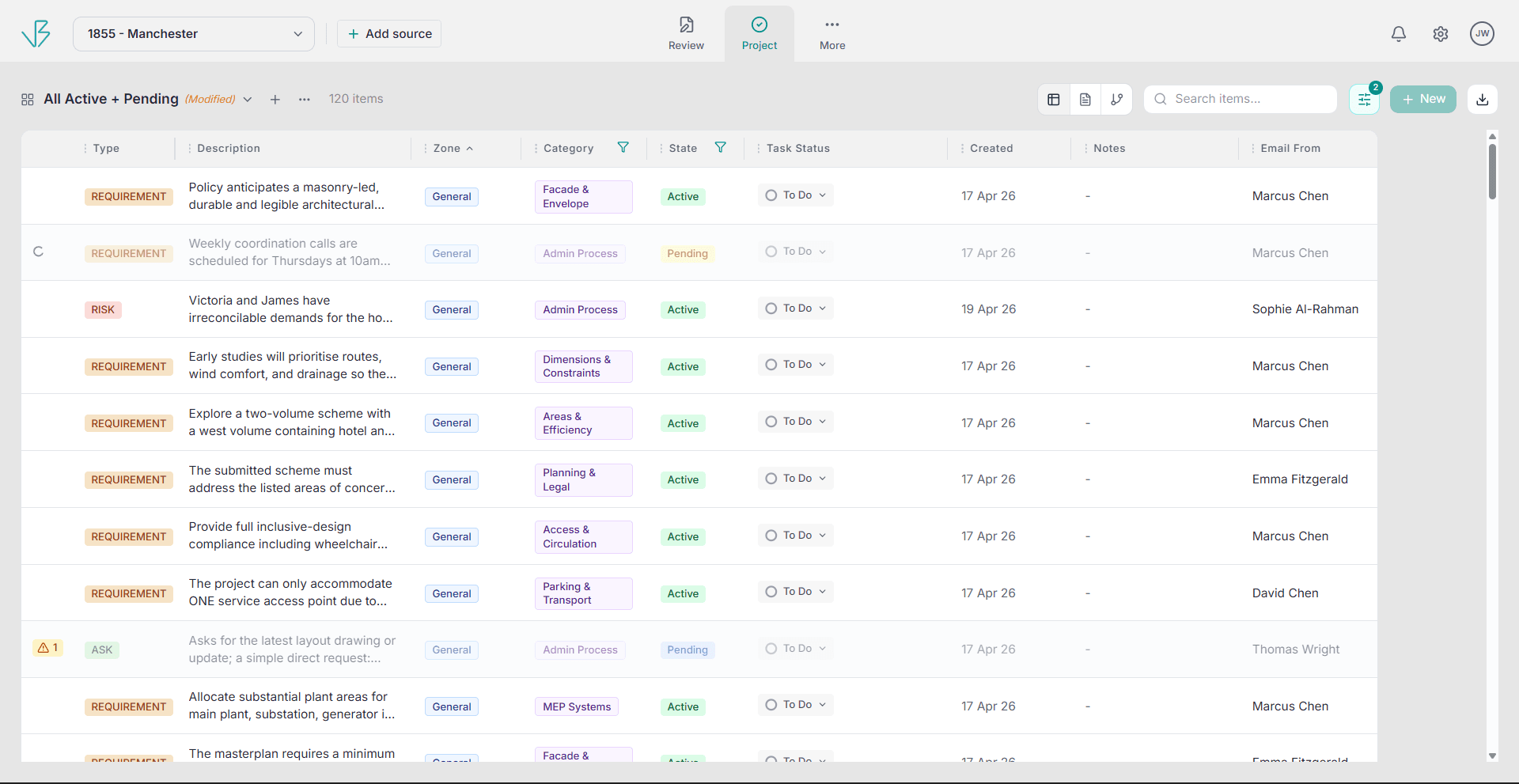
Project sheet view, requirements, risks, and asks with zone, category, state, and source email attribution
Bonus Insight
vBrief's defining design choice is what it does not claim: it does not promise to eliminate rework or guarantee nothing is missed. AI surfaces candidates and a person verifies each one against its original source before it becomes part of the trusted record. For teams that need a defensible answer to "who agreed to this, and when," that human-in-the-loop attribution is the point, not a limitation.
Need help implementing vBrief?
Our advisory team has hands-on experience across 520+ AEC tools. Book a free AI strategy session to get specific recommendations for your firm.